Healthy Lunchbox 2012: Susan from Real Kids Eat Spinach

Today on Healthy Lunchbox 2012, Susan from Real Kids Eat Spinach is sharing some of her favorite school lunchbox tips and three, count ‘em, three, delicious recipes!

A single mother of two children, Susan spends much of her time preparing healthy meals that her children love.  As a certified holistic health coach, Susan offers insight and healthy solutions to families through the internet and her home.  Be sure to contact Susan directly if you are interested in knowing more.

I am so glad Susan chose to join the Healthy Lunchbox series again this year.  To see more Healthy Lunchbox ideas from this year and last, visit the tag cloud on the right and click “Healthy Lunchbox.” 

You can also follow Susan on facebook.

Thanks Susan!

_________________________________________________________________________________

My kids always delight in letting my know what their classmates’ lunchboxes contain. I feel that I’ve really done right as the years pass, as their comments have gradually become less envious and more informed. I don’t encourage self-righteousness in my offspring, but seeing them really grasp the notion of healthy food makes me proud.

And while I also reserve judgment when it comes to double-stuffed Oreos and chocolate Pop-Tarts, their presence on the elementary lunch circuit reminds me that the most fun part of a school lunch is almost always the treat. Of course kids don’t need processed treats to fuel their afternoons, so wanted to share a couple of ideas and recipes that embrace the concept of dessert at lunch. Without the sugar crash an hour later…

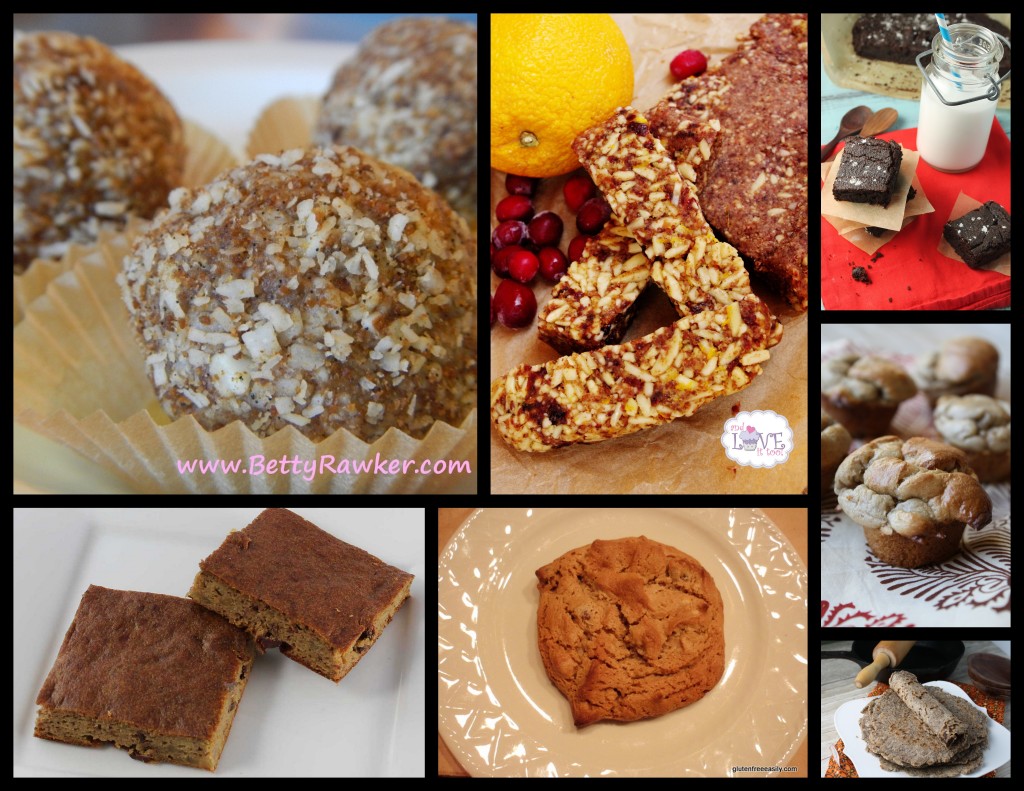
All three of these recipes are free of gluten, grains and dairy and naturally sweetened. Perhaps even more importantly, however, they have all passed rigorous taste testing (performed on my children and several of their peers). I’ll start with a treat that just screams fall and back-to-school time: Cinnamon Apple Snack Bars.

These bars have a triple whammy of cinnamon, which means they will fill your kitchen with the most comforting, cozy scent. Based on almond flour, they are obviously not suitable for a nut-free school lunch. I wanted to include them, however, as they are a perfect candidate for after-school snacking or even a quick breakfast, if your kids’ school doesn’t allow nut products.

Cinnamon Apple Snack Bars

2 cups almond flour
1 tsp. baking powder
1 tsp. cinnamon
1/4 tsp. salt
1/2 cup dairy-free milk of choice
3/4 cup natural applesauce
1/2 cup chopped, peeled apple (about 1/2 large apple)
1 tsp. cinnamon
1 tbs. palm sugar
large handful of raw walnut pieces


for topping:

1 tbs. melted coconut oil
1 tbs. cinnamon
2 tsp. palm sugar

Preheat oven to 350. Combine almond flour through salt in a large bowl. Add milk and applesauce. In a separate smaller bowl, combine 1 tsp. cinnamon and 1 tbs. palm sugar. Toss apple pieces in mixture until they are well coated. Fold into batter long with nuts.

Pour into a greased 8×8 baking dish. In a small bowl combine melted coconut oil, cinnamon and palm sugar. Using a spoon, drizzle all over top of the cake. Bake for 30-40 minutes or until a toothpick inserted into the center comes out clean.

Allow to cool and cut into bars.

My next two school-worthy desserts are both chocolate-based. My daughter doesn’t love anything too rich, so both of these are perfect candidates without being overly fudgy or indulgent. First I wanted to come up with a replacement for the ever-popular pudding cups that often sneak their way into lunches. I’ve made my kids avocado-based chocolate pudding in the past, and love how the fruit adds a creamy texture. I wanted to come up with a version that wouldn’t require additional sweetener, however, so I turned to a different secret ingredient: baked sweet potato. While you can’t taste the potato in the finished product, its inclusion adds both nutrition and the perfect amount of natural sweetness. I can’t wait to try this recipe out with canned pumpkin as well!

This turned out amazingly well, and was ridiculous easy. I cooked my sweet potatoes in the microwave, measuring out the other ingredients while the potato cooled. My pudding was plenty sweet as written, but for a special treat I also stirred in some dairy-free chocolate chips. Using a Vitamix, the chips and the coconut oil emulsified easily; if you don?t have a high-powered blender, melt your butter/oil first.

I suggest you taste your pudding for sweetness before deciding to tinker with it. If it needs more sweetness, you can use a smidge of raw honey, maple syrup or chocolate chips. This pudding tastes great warm, but even better once chilled (thus a perfect candidate for lunchtime).

Sweet Potato Chocolate Pudding

2 large baked sweet potatoes, skins removed
1/3-1/2 cup non-dairy milk of choice
2-3 tbs. of unsweetened cocoa powder
3 tbs. coconut oil or butter
1 tsp. cinnamon
1 tbs. vanilla extract
optional: raw honey, maple syrup or chocolate chips, as desired

Combine all ingredients in a blender and process until smooth.

My final recipe was a slam dunk at a healthy eating lecture I gave to children and their parents at our local library this summer. Even the kids who didn’t really really engage in the subject matter weren’t shy when it came to devouring the brownies I brought! Everyone was shocked when I shared what made it possible to make them grain-free: canned chickpeas. I personally follow a Paleo diet and as such avoid legumes, but even I made an exception to enjoy one of these little brownie bites. They are a good source of fiber and taste positively sinful. I baked mine in mini muffin cups to make them perfectly portioned for kids.


Mini Chickpea Brownies

1/2 cup coconut oil
1/4 cup unsweetened cocoa powder
3/4 cup raw agave nectar or honey
1/4 tsp. salt
1 tbs. vanilla
2 eggs
1 can chickpeas, rinsed and drained
1 cup mini chocolate chips (I use Enjoy Life dairy-free chips)

Preheat oven to 325. Heat coconut oil and cocoa powder in a small pot over low heat; warm until oil has melted and cocoa dissolves. Stir well.

Meanwhile, run chickpeas, sweetener and salt in a food processor until smooth. Add eggs and vanilla, processing again until thoroughly blended. Pour chickpea mixture and chocolate into a large bowl and allow to cool.

Stir in chocolate chips. Scoop batter into greased mini muffin cups and bake for 20 minutes or until a toothpick inserted in the middle comes out clean.

I made all three of these recipes with help from my 6 and 8-year olds; while the older one isn’t always in the mood to get busy in the kitchen with me, they are both equally eager to lick spoons. I hope these healthy treats inspire you and yours as well, and offer them a sweet little reminder of how much love and effort you put into sending them off to school nourished and ready to grow.

Roasted Red Pepper Paleo Hummus

I must admit that, when giving up legumes, hummus was not high on my list of things I would miss.

Don’t get me wrong…I love a good hummus. It’s just not one of those things that was on our regular shopping list.  In fact, previously, I might purchase hummus once a year and I might make it once or twice a year on top of that.

So you can imagine that creating a paleo-friendly hummus was not high on my priority list…and it wasn’t. That is until Shirley shared her Brazilian Un-Cheese Rolls/Biscuits where red pepper hummus is a key ingredient.

Couple this with the opportunity to adopt Shirley in last month’s Adopt a Gluten-Free Blogger event, perfecting a red pepper hummus suddenly hit the top of my to-do list.

To my surprise there are a number of paleo hummus recipes available online, but I still couldn’t find one that was just-right for what I needed.

I did find though, that I prefer cauliflower based hummus recipes over nut and squash based recipes.

Isn’t cauliflower amazing? From potatoes to hummus, this vegetable makes a delicious replacement for so many less nutrient-dense foods.  I love it!

My contribution to this week’s FoodNetwork Summer Fest, this recipe is so delicious that once I finalized it, I had to kick my kids out of the kitchen and force them to stop scooping vegetables through this to ensure I had enough to make Shirley’s Biscuits with!

Use this as a dip, a spread or as part of Shirley’s delicious recipe, I hope you enjoy this as much as we do.

xoxo


Roasted Red Pepper Paleo Hummus

Ingredients

  • 1 large Red Bell Pepper
  • 1 head Cauliflower, cut into flourets
  • 2 Tbs Olive Oil
  • 2 tsp Ground Cumin
  • 2 tsp Smoked/Regular Paprika (I prefer smoked)
  • ½ tsp Smoked/Regular Cayenne (I prefer smoked)
  • ¼ tsp Salt
  • 3 cloves Garlic
  • ½ c Tahini
  • ¼ c Lemon Juice

Instructions

  1. Broil red pepper in the oven or over open flame until skin is charred and flesh is beginning to become tender, turning often to ensure even roasting. Remove from heat and allow to cool.
  2. Lower/preheat oven to 500f.
  3. In large bowl, mix together cauliflower, olive oil, cumin, paprika, cayenne and salt.
  4. Spread seasoned cauliflower evenly over parchment lined cookie sheet and bake for 25-30 minutes or until golden brown.
  5. Once roasting is complete, peel skin from pepper and place this, the roasted cauliflower, garlic, tahini and lemon juice in blender or food processor. Blend/process on medium/medium-high speed and tamper as needed until ideal texture is achieved.
  6. Remove from blender and serve as-is, with vegetables or in your favorite hummus based recipe.
  7. Makes approximately 2 cups
Schema/Recipe SEO Data Markup by ZipList Recipe Plugin
http://andloveittoo.com/roasted-red-pepper-paleo-hummus/


For more pepper persuasion, be sure to visit all of this week’s FoodNetwork Summer Fest bloggers.

Jeanette’s Healthy Living: Stuffed Peppers With Quinoa Grilled Vegetables and Pesto Sauce

Cooking With Elise: Roasted Red Pepper Hummus

What’s Gaby Cooking: Oven-Roasted Peppers With Herbed Breadcrumbs

Feed Me Phoebe: Grilled Flank Steak With Gazpacho Sauce

Big Girls Small Kitchen: Seared Pepper Tacos With Pintos and Avocado Crema

Delicious Lean: Peppery Kung Pao

Daily*Dishin: Shrimp and Chorizo With Red Pepper Chermoula Sauce

Napa Farmhouse 1885: Spicy Roasted Red Pepper Dip With Baked Corn Tortillas

Thursday Night Dinner: Black Bean and Sweet Pepper Salad

Cooking Channel: 5 Stuffed Pepper Favorites

HGTV Gardens: Garden to Table: Peppers

Sweet Life Bake: Rajas de Poblano con Elote y Crema

Dishin & Dishes: Bacon, Onion and Green Chile “Jam”

Healthy Eats: Peppers for Breakfast, Lunch and Dinner

FN Dish: Meat and Peppers

Growing Up Isn’t So Bad, Peter Pan Squash Spiced Oven Fries

Today on FoodNetwork Summer Fest, food and garden bloggers are joining up to highlight the vibrant staple: Summer Squash.

Oddly enough, the title “Summer Squash” has less to do with the time a squash is grown or harvested and more to do with the sustainability of a squash.

You see, summer squash like zucchini, yellow squash, bulan and ball squash as pictured here all have thin, edible skins and will only maintain their edibility for a few weeks after they are picked. Wherein winter squash like pumpkin, butternut, spaghetti squash and Hubbard squash have thick rinds and are able to keep for months at a time; hence, they are perfect for winter storage.

Of course, as it is with all vegetables, the sooner they are eaten after they are picked, the better the nutrient retention will be.

Still, when preparing food storage or planning meals, it is good to know how long you will be able to keep vegetables like these.

Today though, I would like to talk to you about my friend Peter Pan.
No, not the boy who refused to grow up…

Rather Peter Pan the squash. Peter Pan squashes are light-green scalloped squashes that are typically harvested when they are a mere 2 ½ to 3 inches across. Among the smaller of the summer squashes, it is said that their name comes from their refusal to ‘grow up’ like it’s sister squash, Patty Pan, which is golden in color and generally twice as large as Peter Pan squash is at harvest.

I told my kids that between the funny shape and light-green color, they look like something Peter Pan would wear and that must be how they got their name.

Meh. You decide.

Oddly enough, I had never eaten a Peter Pan squash before one of my dear Farmer’s Market vendors introduced me to them this year!

Goodness knows how I love to play with my veggies so I asked her what she does with them.

“Fries,” she said, “these make the perfect oven fries.” Then she continued “but I love to cover mine in an egg and flour batter so I don’t know what you’ll do with them.”

To which I smiled and said “oh, I’ll figure something out.”

;) That is what I do after all, isn’t it?

But you know, she is right. These precious little squash bake up to be some of the tastiest oven fries I have ever enjoyed.

The perfect mixture of grown-up savory yet maintain childlike undertones with just a hint of cinnamon and cocoa, great for children of all ages I hope you enjoy these Peter Pan Oven Fries as much as we do.

Peter Pan Squash, Spiced Oven Fries

Ingredients

  • 3 lbs Peter Pan Squash (about four squash)
  • 1 ½ tsp Smoked Paprika
  • 1 tsp Ground Cinnamon
  • 1 tsp Cocoa Powder
  • 1 tsp Sea Salt
  • ½ tsp Smoked Cayenne (I get mine from a local FM vendor, regular cayenne would work well, too)
  • 3 Tbs Olive Oil (not evoo)

Instructions

  1. Preheat oven to 425f.
  2. Clean squash but leave skins intact. Slice squash in half and remove seeds with a spoon. Cut squash into fry-sized pieces and place in large mixing bowl.
  3. In small bowl, mix together smoked paprika, cinnamon, cocoa powder, sea salt and cayenne. Set aside.
  4. Drizzle cut squash evenly with olive oil, sprinkle spice mixture evenly on top and mix the squash with your hands to ensure even coverage. I recommend using gloves for this step if you have sensitive skin, that cayenne can sting!
  5. Spread spiced covered squash over parchment lined cookie sheets, ensuring they are in one thing layer—anything more will leave them soggy and nobody wants soggy fries.
  6. Bake for 15-20 minutes or until golden brown and crisp.
  7. Remove from oven and serve.
  8. Makes 6-8 servings
Schema/Recipe SEO Data Markup by ZipList Recipe Plugin
http://andloveittoo.com/growing-up-isnt-so-bad-peter-pan-squash-spiced-oven-fries/

Be certain to stop by all of today’s FoodNetwork Summer Fest featured recipes for more fantastic ideas on how to use your summer squash today! xo

Jeanette’s Healthy Living: Quick and Easy Sesame Summer Squash Stir-Fry

Cooking With Elise: Orange Summer Squash Bread

Feed Me Phoebe: Summer Squash and Cornmeal Cakes With Tarragon

Chez Us: Zucchini Pancakes With Minty Dill Crème Fraiche

Made By Michelle: Pattypan Squash and Tomato Frittata

Cooking Channel: Our Top 5 Favorite Squash Recipes

Daily*Dishin: Summer Squash Confetti Salad

Delicious Lean: Summer Squash Ribbons With Feta and Pine Nuts

Napa Farmhouse 1885: Summer Squash Chips

Ingredients, Inc.: Summer Squash and Kale Sauté

Thursday Night Dinner: Summer Squash Medley

Sweet Life Bake: Zucchini Fried With Tequila-Spiked Avocado Dip

Dixie Chik Cooks: Fried Summer Squash Parmesan Sliders

Healthy Eats: Summer Squash Any Way You Slice It

FN Dish: Cheesy Summer Squash

Plum Pickin’ Pineapple Jam

This time of the year our pantry and refrigerator is overloaded with all kinds of delicious produce.

Most recently, with the help of Bountiful Baskets we have received an overabundance of fruits like cherries, peaches, nectarines, plums and pineapples.

So much so that even my large family cannot keep up.

What’s a girl to do?  Well preserve them of course!

Freeze them, dehydrate them, jam them, can them, whatever you do, do your best to maintain the natural goodness of these fruits.

This recipe combines the sweetness of pineapple with the tartness of fresh-picked plums.  No added sugar, artificial flavor or preservatives, this is a jam you can be proud to serve your family.

The best part?  It’s only two ingredients and can be whipped up in minutes, poured into your crockpot and prepared overnight while you are sleeping.

It is that easy.

I suppose it’s not really fair to call this a jam.  The texture better resembles a fruit butter, but the process is very jam-like and the flavor reminds me of my great-grandmother’s plum jelly.  If you desire a more jam-like preserve, simply create a slurry of arrowroot and water (1 tbs of each should do the trick), remove the reduced pineapple and plum preserves from the crock, cook them over medium heat and add just enough of the slurry to create the jam-like texture you desire.

Because this recipe only makes four half-pints, I prefer to simply keep this in the refrigerator.  If you choose to keep yours in the pantry, I recommend a hot-water canning bath. Step-by-step directions can be found here.

Whatever you choose to do with your preserves, I hope they invoke memories of summertime and stories on grandmas lap, just as they do for me. :)

Enjoy!

Plum Pickin’ Pineapple Jam

Ingredients

  • 3 lbs Ripe Plums
  • 1 lb Pineapple

Instructions

  1. Prepare plums by washing, slicing and removing pits. Leave skins intact. Place plums and pineapple into high-speed blender, ½ batch at a time.
  2. Blend until smooth and pour into 6-quart crockpot.
  3. Set crockpot to cook on high for 6 hours, do not use your lid! It is important to allow the mixture to reduce by at least half (mine usually reduces to about 1/3 once complete), so please leave the lid off to ensure for the best reduction.
  4. Once reduced to the appropriate thickness, fill four half-pint jars and refrigerate or process as directed.
  5. Serve on your favorite gluten-free/paleo bread.
Schema/Recipe SEO Data Markup by ZipList Recipe Plugin
http://andloveittoo.com/plum-pickin-pineapple-jam/


Be certain to visit the other FoodNetwork SummerFest bloggers to see what other fun dishes you can make with your plums this season!

Ingredients, Inc.: Pork, Plums and Rosemary Kabobs

Virtually Homemade: Grilled Plum Pizza With Goat Cheese

Cooking Channel: Best Plum Dessert Recipes

BGSK: Grandma Esther’s Plum and Walnut Cake

Delicious Lean: Plum Delicious Pork Chops

Daily*Dishin: Roasted Chicken With Plum Chili Salsa

Healthy Eats: 6 Ways to Cook With Plums

Napa Farmhouse 1885: Time for Plum Cobbler?

Thursday Night Dinner: Plum BBQ Chicken

From My Corner of Saratoga: Plum Upside Down Cake

Cooking With Elise: Vanilla Plum Tart

Sweet Life Bake: Plum Pineapple Margarita

FN Dish: Perfect Plum Recipes

Fermented Spicy Garlic-Dill Cukes and Zukes

Between the digestive issues my daughter has faced since she was a baby and my own celiac diagnosis, I have been somewhat obsessed with healing our guts for quite some time.

For many years, I thought yogurt and liquid acidophilus were our only options.  It has not been until recently that I have learned the magic of fermented foods.

More specifically, fermented vegetables like cucumbers and cabbage—better known as pickles and sauerkraut.  So when I was invited to join in on this year’s FoodNetwork Summerfest, I was excited to see cucumbers as the first ingredient on the produce-packed list!

If you have never made fermented vegetables, now is a great time to start!  Not only are they really easy, making your own fermented vegetables is extremely affordable and delicious!

How does fermenting work?

According to Exploratarium.edu, proper fermentation helps to keep away “bad” spoilage-causing microorganisms and allows the “good” bacteria, lactic acid, to flourish.

Of all the ‘friendly flora’ in our guts, lactobacilli, are among the most important and the most fragile.  Stress, poor diets and antibiotics will kill off lactobacilli, but eating foods rich in good bacteria will help them replenish.  Given that our digestive system is the heart of our immune system, it is very important to take care of your gut. Very important.

Of all the vegetables you can ferment, cabbage and cucumbers produce the most lactic acid bacteria and should be included in anything you choose to ferment.

Slicing your vegetables will help accelerate the fermentation process and ensures a snackable treat once the fermentation process is through!

It is important to use purified water.  Chlorine is present in most tap water and will kill off the beneficial bacteria before it has a chance to take over.  If you do not have a filter, either use bottled water or boil your water for 10 minutes and allow it to cool.

Additionally, too much salt will kill the fermentation process as well!  Use 100% salt. Non-iodized salts like pickling salt, pure sea salt or Himalayan salt are your best options.  Make certain the only ingredient on the label is “salt.”

The best salt-to-water ratio for any fermented vegetable recipe is 1.5-2 tablespoons to 1 liter of water.

Before you begin, be sure to sterilize everything! Your jar, your lid and most especially, your rock.  This can be done using the sterilization setting in the dishwasher or by boiling all of the equipment for 15-20 minutes prior to use.

As always, organic vegetables are best.  Everything used in this recipe is in-season and should be readily available at your favorite store and most especially, at your local farmer’s market.

I hope this recipe for fermented cukes and zukes finds you well!

Happy summer!


Fermented Spicy Garlic-Dill Cukes and Zukes

Ingredients

    Equipment Needed
  • 1-Steralized Half Gallon Glass Jar with a Screw-on Lid (I use an old pickled okra jar)
  • 1-Steralized Rock, small enough to fit in the lid of the jar, big enough to keep your vegetables below the brine
  • Ingredients
  • 3 heads of fresh dill
  • 2 large cloves of garlic
  • 1 jalapeño, seeded for mild, whole for spicy
  • 1 lb cucumbers, sliced
  • ½ lb baby zucchini, sliced
  • 1.5-3 Tbs Pure Salt (Non-iodized Pickling, Sea Salt or Himalayan)
  • Purified Water

Instructions

  1. Place dill, garlic and jalapeño in the base of sterilized jar. Layer sliced cucumbers and zucchini’s as desired, I like to slice and layer vegetable by vegetable as I go.
  2. Stop adding vegetables once you have filled the jar to 1.5 inches below the surface.
  3. Place rock on top of vegetables, ensuring you have centered it well enough to keep vegetables below the surface during fermentation process.
  4. Mix together 1 litre of room-temperature water with 1 Tbs salt, stir until dissolved. Follow this process until vegetables are covered in brine, stopping when there is ½ inch head space between the brine and the top of the jar.
  5. Screw on lid and place jar in bowl to help capture overflow during the fermentation process.
  6. Set jar away from windows in a cool room, with temperatures below 72 degrees for 2-2 ½ weeks. Because gasses will form and pressure will build while the fermentation process, it is important to unscrew and release pressure from your jar on a daily basis until the vegetables are ready for refrigeration. Make certain you set a calendar reminder, put the jar in a place you will not forget to do this, get in the habit of doing this first thing in the morning, before you eat breakfast, after you get home from work, whatever you need to do to remember to unscrew the lid. Too much pressure can mean danger, worst case scenario it means an exploding jar and ruined vegetables (or worse). Nobody wants that.
  7. Keeping the lid on helps prevent harmful bacteria from forming. If a white scum forms on the top, skim it off. The liquid will cloud over time, this is a normal part of the good bacteria growth.
  8. Once fermentation is complete and you are satisfied with the flavor, fermented vegetables can be stored in the refrigerator for up to 1 year.
Schema/Recipe SEO Data Markup by ZipList Recipe Plugin
http://andloveittoo.com/fermented-spicy-garlic-dill-cukes-and-zukes/


I hope you enjoy these fermented vegetables as much as we do! Be sure to visit the rest of the FoodNetwork Summer Fest bloggers for more idea on how to enjoy your cucumbers this season!

The Sensitive Epicure: Chinese Style Cucumbers

What’s Gaby Cooking: Cucumber, Herb and Pita Salad

Ingredients, Inc.: Easiest Cucumber Salad

Virtually Homemade: Cucumber Strawberry Cooler

From My Corner of Saratoga: Marinated Cucumber Salad

The Cultural Dish: Pasta With Roasted Shrimp and Cucumbers

Daily*Dishin: Southern Benedictine – Creamy Cucumber Spread

Delicious Lean: Cucumber Jicama Salad

Napa Farmhouse 1885: Cucumber and Avocado Open-Face Sandwiches

FN Dish: No-Cook Cucumber Recipes

Cooking With Elise: Wedge Salad With Cucumber-Ranch Dressing

Strawberry Coconut Butter

I first discovered coconut butter at my local health food store.  Purchased more out of curiosity than anything, one little bite and I was positively hooked!

This Strawberry Coconut Butter came after experimenting with this brilliant Coconut Butter recipe from Lexi’s Kitchen.  Filled with nutrient dense coconut and coconut oil, coconut butter is one of those perfect foods that is loaded with medium-chain fatty acids, lots of fiber, protein vitamins and minerals.

Somewhere between strawberry mousse and strawberry cream cheese, this spread is perfect for your grain-free biscuits (recipe coming soon), grain-free waffles, pancakes or simply straight off the spoon!  However you use it, I hope you find this spread as easy and delicious as we have!

Enjoy!


Strawberry Coconut Butter

Ingredients

  • 4 c Unsweetened Shredded Coconut, divided
  • 2 c Strawberries (fresh or thawed if using frozen)
  • ¼ c Coconut Oil

Instructions

  1. Add 3 cups shredded coconut, strawberries and coconut oil to high speed blender.
  2. Blend on high until smooth, tampering as needed.
  3. Add final cup of flakes and blend on high until smooth and creamy.
  4. Transfer to mason jar and store in your refrigerator until ready to serve.
  5. Makes approximately 3 cups.
Schema/Recipe SEO Data Markup by ZipList Recipe Plugin
http://andloveittoo.com/strawberry-coconut-butter/

Do you have a favorite coconut recipe?  Don’t forget to enter this month’s Ingredient-Challenge Monday, just four days left for you to enter for the chance to be featured on next month’s ICM Ingredient Announcement!

This recipe is also being shared at: Friday Foodie Fix, Wellness Weekends

Unsweetened Vegan Coconut Milk Crockpot Yogurt

When my daughter was diagnosed with a milk allergy at just 17 months old, I could have never imagined where our food journey was about to take us.

It was just two years prior to that when I learned of my son’s shellfish allergy.

Because my son is severely allergic to shellfish, exposure giving him a full-blown anaphylaxis response; and because I had never ever dealt with a food allergy before his, I figured his immediate and dire reaction was exactly what we should expect with all food allergies.

If only it were so easy.

According to the Mayo Clinic, food allergy symptoms may include:

  • Tingling or itching in the mouth
  • Hives, itching or eczema
  • Swelling of the lips, face tongue and throat, or other parts of the body
  • Wheezing, nasal congestion or trouble breathing
  • Abdominal pain, diarrhea, nausea or vomiting
  • Dizziness, lightheadedness or fainting

These symptoms do not include more severe, anaphylaxis reactions where there may be a constriction and tightening of airways, shock, rapid pulse, dizziness or loss of consciousness; symptoms that require immediate care.

With so many varied symptoms, some that may not reveal themselves for as long as two to three days after ingesting an allergen, it is difficult, if not impossible at times to properly diagnose a food allergy.

When an allergy is diagnosed, especially when it is a food that is commonly enjoyed on a daily basis (milk, wheat, etc), there is often a panic of “what am I going to eat/how am I going to feed my child?”

That is where mommy bloggers like me come in.

Once I began to dig in and figure out what all exactly had milk in it, I immediately felt a sense of panic.

Quickly I learned that I had to not only watch out for the word “milk” on the label, nooo…I had to watch out for key words like: casein, whey and lactose.

After hours and hours of inspecting, dissecting and learning to read food labels, here are just a few things that I learned.

Bread has milk it.

Ham has milk in it.

‘Veggie cheese’ has milk in it.

A number of artificial sweeteners are derived from milk.

Breath mints. Breath mints sometimes have milk in them.

Medication sometimes has milk in it (like that pink amoxicillin pediatricians often prescribe)

Chocolate. Oh my poor baby…do you know how difficult it is to find chocolate that is truly dairy free?

Oh my poor baby.

But then I learned, not all bread has milk in it.  There is plenty of ham that is made without lactose or casein additives.  Vegan cheese is okay for us; ‘veggie’ cheese often is not.  Artificial sweeteners are not good for us anyway, so we just eliminated those…breath mints don’t always have milk in them and when it comes to chocolate, the richest, creamiest and finest dark chocolates are often dairy-free.

I can live with being a chocolate snob. Better yet, I can live with teaching my daughter to be a chocolate snob.

There are certainly worse things in life.

Still, when it comes to every day foods: cheese, yogurt, milk… where do you turn when you have a dairy allergy?

Fortunately for us, it seems the market is finally becoming aware of the growing epidemic food allergies have become.

Instead of being a rarity, we are finding that our difficulties are actually being shared by many in our community, in our country and even throughout the world.

Every day it seems new products arrive which make our world not only easier, but tastier too.

Unfortunately, many of those products come with a big price tag.

Take yogurt for example.

One six-ounce container of dairy free yogurt costs us anywhere from $1.29-$1.60 each.

Each.

We love yogurt.  We love the naturally healing good bacterial provided by yogurt.

We do not, however, love that price.

It did not take me long to determine that making my own yogurt might be a worthwhile venture.

But how?

My friend Stephanie O’Dea, the crockpot lady herself seemed to have the answer.

You see, Stephanie came up with the ingenious idea of making organic yogurt in her crockpot.

A reader of hers even made an allergy-free version of crockpot yogurt.

So I tried it.

I failed.

I tried again.

I failed.

By the fourth or fifth time, I had just about given up.  Just about.

After many, many attempts…I am pleased to say that I, too, have learned to make yogurt in my crockpot.

More than just a cultured milk product (which is very yummy in its own right), I finally managed to make a yogurt my children can sink their spoons into.

With just a few tweaks to Stephanie’s ingenious recipe, I have turned 6 oz of yogurt into 128 ounces of pure gold…

Okay, so it’s still yogurt.  But for a savings of about $30 a batch, it might as well be gold in my book.

Learn how to make your own liquid go…er, yogurt by following the recipe and detailed steps below.

Enjoy!


Unsweetened Vegan Coconut Milk Crockpot Yogurt (Adapted from Stephanie O'dea's. original recipe)

Ingredients

  • ½ gallon Unsweetened Coconut Milk
  • 4 Tbs Agar Agar Flakes
  • 6 ounces (1 container) Plain, Dairy-Free Coconut Milk Yogurt

Instructions

  1. In 4-6 quart crockpot, mix together ½ gallon unsweetened coconut milk and 4 tbs of agar agar flakes. Turn temperature to low, cover and cook for 1 hour.
  2. Remove cover, whisk agar agar and milk mixture until fully incorporated, return cover and let cook for another 1 ½ hours (2 ½ hours total).
  3. After 2 ½ hours, remove cover, whisk agar agar and milk mixture again, return cover and unplug crock.
  4. Allow crock to sit for 3 hours, unplugged with the lid on.
  5. When 3 hours have passed, scoop out 2 cups of the warmish milk/agar mix and put it in a medium bowl. Whisk in the container of dairy-free coconut milk yogurt then dump the bowl contents back into the crockpot. Stir to combine.
  6. Keeping crock unplugged, return lid and wrap a heavy bath towel (or two) around the crock for insulation. Let crock sit for 10-12 hours (overnight is best). In the morning, you will discover your lovely yogurt, milk and agar mix has thickened, although it will not be as thick as the store-bought stuff you are used to. Still, there is no doubt this is yogurt.
  7. If you still want to add more thickness, try adding in ¼ c tapioca starch or arrowroot powder.
  8. You may find bits of agar still floating in the mix, because we add in whole fruits to ours, the few flakes that are left never bother us.
  9. If you must, straining your yogurt can remove any extra agar remnants.
  10. Add in fruit, honey or whatever toppings you please to your velvety white creation.
  11. Have fun, make it your own and eat in good health.
  12. Makes 1/2 gallon.
Schema/Recipe SEO Data Markup by ZipList Recipe Plugin
http://andloveittoo.com/unsweetened-vegan-coconut-milk-crockpot-yogurt/

No-Bake Vegan Candybar Brownies (Grain-Free, Dairy-Free, Refined Sugar-Free, Raw alternative noted)

Let me start by saying Pinterest is a dangerous site.

Very dangerous.

In addition to losing unimaginable amounts of time, Pinterest can motivate you to do things you might not have done before.

Sometimes this is a good thing.

Sometimes this is not.

These no-bake, refined sugar-free vegan candy bar brownies are the result of a number of Pinterest inspired ideas.

Is this a good thing?

Yes.

Dangerous, maybe…but good none the less.

First, I came across this beautiful recipe for snickers brownies.  Filled with sugar, gluten and dairy, as delicious as this recipe appears, it is one that my family will never be able to enjoy.

Then there is this recipe for raw brownies from Taste Space.  Five ingredients no added sweeteners; and I thought, you know that could work as the base for a gluten-free dairy-free snickers brownie…

Finally, there have been a number of pins showing how easy it is to make marshmallows at home, so I thought I would give this my own spin.

Top everything off with a very easy raw caramel and a from-scratch refined sugar-free chocolate topping, I almost nailed it a vegan no-bake version of that beautiful snickers brownie mentioned above.

Almost.

Through experimentation, a bit of research and a lot of tweaking, I found that making a marshmallow crème that is vegan, grain-free, soy free and refined sugar free is not that easy.

And once you accomplish something close-to…well, it’s not nearly as fluffy as what one would hope marshmallow cream to be.

I did, however, create exactly what I hoped to create…then I failed to take pictures.

What you see here is the remnants of my grain-free, soy-free, refined sugar-free vegan marshmallow crème.

It is fluffy, tasty and very marshmallow-like…but doesn’t hold up quite the same way as the traditional stuff would for the nougat portion of this recipe.

I thought about leaving that portion out, but it is just too good to forget.

That being said, without the nougat portion of this recipe, you would still have some pretty amazing caramel brownies.  Use raw cocoa and this recipe is not simply refined sugar-free and vegan, this recipe would be raw to boot!

So go for it.

Or stick with what I have below for an extra decadent, never forget, mouth-watering candylicious brownie that you will be forever grateful you took the time to make.

What essentially was my birthday gift to myself is now my gift to you.

With nearly two pounds of Mejool dates and a combined total of two-cups of good-quality maple syrup; this recipe is far from economical, but truly worth every penny.

May you find these decadent treats as satisfying as we do.

Enjoy!


No-Bake Vegan Candybar Brownies (Grain-Free, Dairy-Free, Refined Sugar-Free, Raw alternative noted)

Ingredients

    Brownie Layer
  • 2 cups Blanched Almond Flour
  • 1 cup Cocoa Powder
  • ¼ tsp Sea Salt
  • 2 ½ c Medjool Dates, pitted
  • Nougat Layer
  • 1 batch Grain-Free, Vegan Marshmallow Crème (recipe below)
  • ¼ c Butter Flavored Palm Shortening
  • 1 c Palm Sugar
  • ¼ c Full-Fat Canned Coconut Milk (My new favorite is Native Forest)
  • ¼ c Unsweetened Almond Butter (I use homemade)
  • 1 ½ c Pecans or Cashews
  • 1 tsp Vanilla
  • Caramel Layer
  • 2 c Medjool Dates, pitted
  • ¾ c Maple Syrup
  • Candybar Topping
  • 1/3 c Coconut Oil
  • ½ c + 2 Tbs Cocoa Powder, Divided
  • 2 tsp Vanilla
  • ¼ c Maple Syrup
  • 3 Tbs + ¼ tsp Arrowroot Powder
  • ½ c Unsweetened Almond Butter (I use homemade)
  • Marshmallow Crème
  • 1 c Filtered Water (divided)
  • 3 Tbs Agar Agar Flakes
  • 1 c Maple Syrup
  • 1 tsp Vanilla
  • ¼ tsp Sea Salt

Instructions

  1. Line 9x13 cake pan with parchment paper.
  2. Make marshmallow crème by boiling ½ c filtered water. Add in agar agar flakes and continue to boil for another 3-4 minutes or until flakes have completely dissolved. Set aside.
  3. In medium sauce pan, bring remaining ½ c filtered water, 1 c maple syrup, vanilla and salt to a boil over medium-high heat. Using a candy thermometer, allow mix to continue to boil until a temperature of 240 degrees or soft ball stage has been achieved. This will take approximately 8-9 minutes.
  4. Remove sauce pan from heat.
  5. Using stand mixer, combine agar agar base with candied syrup using low/medium speed. Slowly turn mixture to high and continue beating until mixture becomes thick like marshmallow crème (about 10 minutes).
  6. While stand mixer is beating away at marshmallow mix, bring together brownie layer by pulsing together almond flour, 1 c cocoa powder, and ¼ tsp salt. Slowly add 2 ½ c dates, one piece at a time through the feed tube of the food processor while processor is running. Once complete, mix should resemble coarse crumbs but will stick together when pressed.
  7. Press brownie mix into the base of the parchment-lined 9x13 cake pan, spreading evenly to ensure full coverage. Set aside.
  8. Return to marshmallow crème, stopping stand mixer once the mix is light and fluffy (not as thick as traditional marshmallows, but no doubt it is marshmallow crème).
  9. Using medium sauce pan, prepare nougat layer by melting butter-flavored palm shortening over medium heat. Add palm sugar and coconut milk, stirring until dissolved. Bring to a boil and add in the marshmallow crème, almond butter and vanilla, stirring until smooth. Remove from heat and fold in pecans or cashews. Pour evenly over brownie layer, using spatula to ensure even coverage. Place brownies in the freezer until you are ready for the next layer.
  10. Using high-speed blender, combine 2 cups of dates with ¾ c maple syrup and blend until completely smooth and caramel-like. Remove brownies from freezer. Pour caramel on top of nougat layer and spread evenly with a spatula to ensure complete coverage. Return to freezer.
  11. Wash high-speed blender, dry with towel, making certain to remove all water because water could damage the precious final step…creating the chocolate coating.
  12. No one wants to ruin their chocolate coating.
  13. Prepare chocolate coating by adding coconut oil, ¼ c + 2 Tbs cocoa powder, vanilla, maple syrup and arrowroot powder to blender. Mix on medium about 20 seconds then increase to high for about 10 seconds. Add remaining ¼ c cocoa powder and ½ c almond butter. Blend until smooth.
  14. Remove brownies from freezer and carefully spread chocolate mix evenly on top of the caramel layer. Once complete, place brownies in refrigerator for 30 min or until ready to serve. The top should be crisp like a candybar before serving.
  15. Completely remove brownies from pan by lifting parchment paper before cutting. This will make creating uniform squares a lot easier.
  16. Because these are so rich, I recommend cutting them into smaller-than usual brownie bites.
  17. Have some unsweetened coconut or almond milk handy…you’ll want something to enjoy these with.
  18. Makes 24-36 servings.
Schema/Recipe SEO Data Markup by ZipList Recipe Plugin
http://andloveittoo.com/no-bake-vegan-candybar-brownies-grain-free-dairy-free-refined-sugar-free-raw-alternative-noted/


This recipe is also linked to: Gluten-Free Wednesdays

Ingredient-Challenge Monday: Pineapple Bacon Bites

Welcome to the April Ingredient-Challenge Monday!

As announced yesterday, this month we feature the mouth-watering pineapple as our challenge ingredient.

In spite of its natural sweetness, pineapples are not only low in calories (82 calories per cup of pineapple chunks), they are also a good source of fiber, Vitamin A, Calcium, Iron and Vitamin C.  Most importantly though?  This luscious fruit has a very low glycemic load making it a wonderful way to sweeten almost any dish without the need to add sugar.

The recipe I have to share with you tonight isn’t really a recipe.

My husband tells me it is, but there are only two ingredients.

It does come with a few instructions, so I suppose this counts as a recipe…

But it’s just so darn easy. And delicious.

In fact, of all the things available at our Easter gathering—cupcakes (from Elana’s Pantry none the less), deviled eggs, paleo pizza, veggies, fruits, etc… it was these delicious little bites that won the crowd over.

I have seen pineapple bacon bites floating through the web, yet every recipe I have come across require sugar to be added.

Why?

Pineapple is naturally sweet, and when you cook them pineapple caramelizes into one beautifully candy-like divinity.

It is important to use fresh pineapple for these bites.  The canned stuff just doesn’t hold up.  Trust me, it is worth every last bite.

Without further adieu, I am happy to open this Ingredient-Challenge Monday with this simply delicious almost not a recipe, recipe.

Enjoy!

Pineapple Bacon Bites

Ingredients

  • ¼ Fresh Pineapple, skin removed
  • 1 package (12 oz) high-quality nitrate free bacon (quality makes all the difference)

Instructions

  1. Pre-heat oven to 425f.
  2. Prepare pineapple by slicing into 1-inch by ½ inch cubes, or would that be a prism? Oh, shucks… cut your slices into 1-inch by 1-inch squares that are ½ inch in depth. This seems to be the ideal wrapping size.
  3. Wrap one entire slice of bacon around each pineapple cube.
  4. Lay each bacon-wrapped pineapple on to parchment-lined cookie sheet with the bacon-flap side down.
  5. Bake at 425f for approximately 30 minutes or until bacon is perfectly brown.
  6. Remove pineapple bites from pan and allow to cool on paper towel lined plate, allowing the bacon to crisp and the drippings to dry.
  7. Serve warm.
  8. Makes approximately 13-14 bites.
Schema/Recipe SEO Data Markup by ZipList Recipe Plugin
http://andloveittoo.com/ingredient-challenge-monday-pineapple-bacon-bites/

:) Now, what is your favorite way to enjoy pineapple?

Link up your favorite recipes by 11:59pm April 23, 2012 for your chance to be featured on the next ICM Challenge-Ingredient Announcement.

Don’t have a blog?  You still have a chance to enter!

Simply leave your recipe in a comment below for your equal-opportunity entry.

Please note that all entries must be linked back to this post and must feature pineapple as a key ingredient. In order for my family to taste-test, your recipe must also be gluten-free and dairy-free…so please make sure your recipe falls under these requirements as well.

We look forward to seeing all of your pineapple goodness!

Happy Ingredient-Challenge Monday!


Guest Post for Dixie Chik Cooks: Sugar-Free Chocolate Cashew Butter (Raw, Vegan)

This post originally aired over at Dixie Chik Cooks.  While Shea (the original Dixie Chik) is not gluten-free or dairy-free, many of her creations are naturally safe for those of us who are.  Creative, spicy, and beautifully talented, be sure to visit Dixie Chik Cooks for some beautifully southern inspiration.


It is always an honor to have a friend request a guest-post.  Yet even though Shea and I work together more often than most bloggers work together, because our methods of cooking are so different it is often difficult to come up with something that she and her readers will love equally as my family and my readers do.

But then, there’s chocolate.  Who doesn’t love chocolate?

When my son asked me to make him a chocolate sandwich (think: Nutella), I knew just what I wanted to share.

Because two of my children and I cannot have milk, luxuries like Nutella are a no-go for us.  That and the amount of sugar in the store-bought brands of chocolate nut-butters is enough to send my children into permanent hyper-active mode.

When there’s five of them and only one of me…

Let’s just say I avoid sugar as best I can.

Still, we like sweet. We love chocolate. And, we like to enjoy our food.

Thus, I am happy to share our solution to the no store-bought chocolate butter conundrum.

Choosing raw cashews over hazelnuts primarily because they are easier to find in our humble little town, this recipe is smooth, rich, creamy and every bit as sinfully delicious as a chocolate nut-butter should be…only, this one has none of the sugar or chemicals that come with the store brand.

Thank you, Shea, for the opportunity to share, I hope to see you all again sometime soon.

xoxo

Sugar-Free Chocolate Cashew Butter (Raw, Vegan)

3c Raw Cashews

3 Tbs Cocoa Powder

3 Tbs Coconut Oil

6 Dates, soaked 1 hour

10 drops Vanilla Crème Liquid Stevia


Using high-speed blender, add ingredients in the order provided above.  Blend on medium speed for about 3 minutes, tampering all ingredients until somewhat crushed, turn speed to high and continue to blend until the natural nut oils are released and the nut butter is creamy and smooth, approximately 5 minutes longer.  Remove from blender, serve and enjoy.

Store in an air tight container and refrigerate.

Makes approximately 3 cups of nut-butter.

Related Posts Plugin for WordPress, Blogger...